


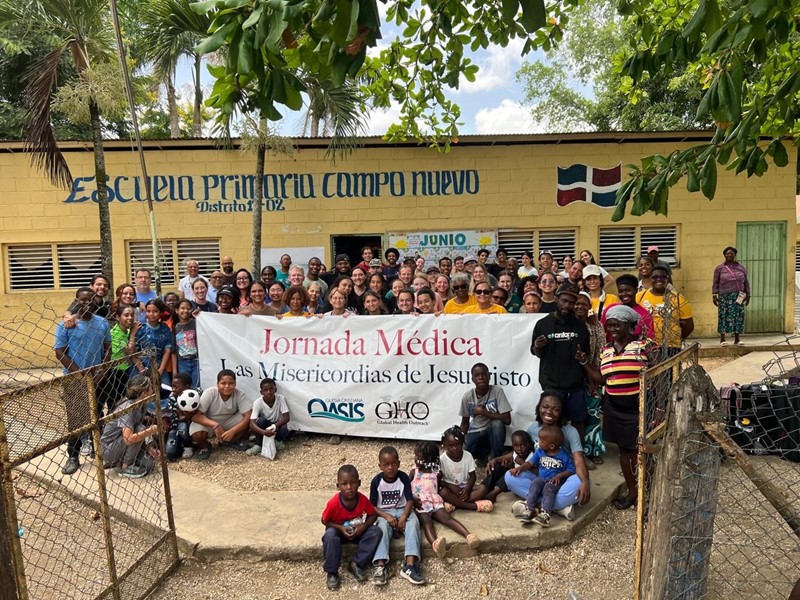

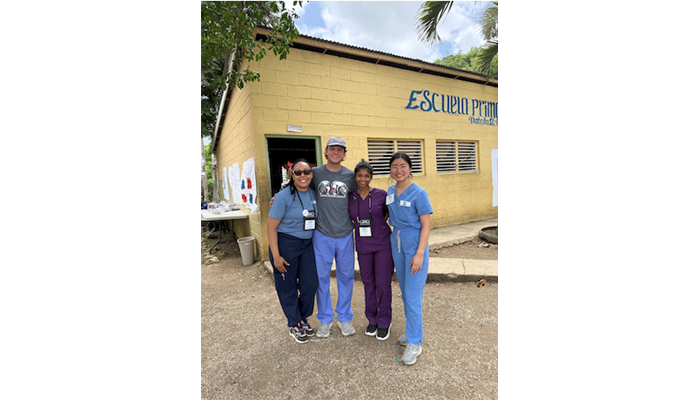
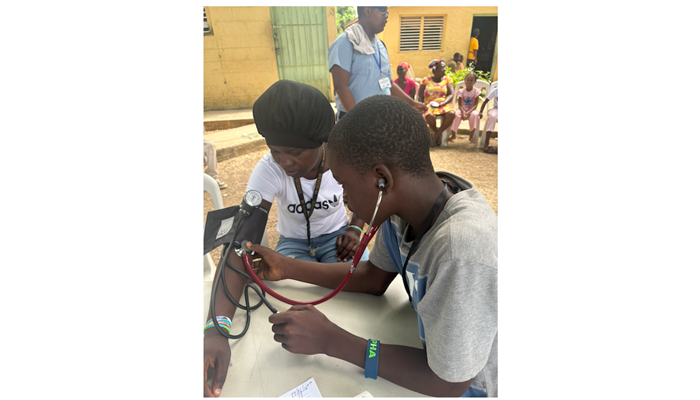
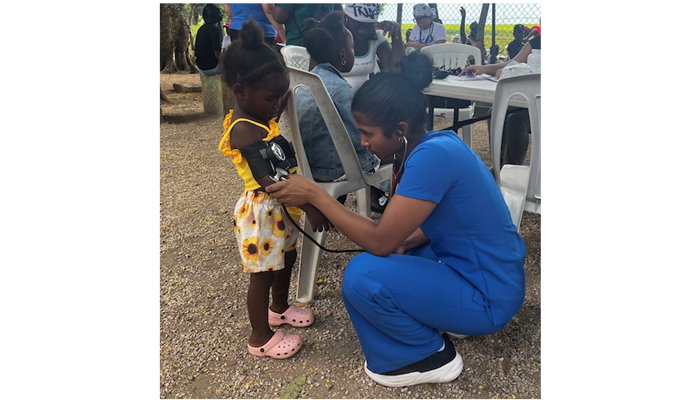
We gathered around in front of the school, wiping the sweat from our brows. Although many of us didn’t speak the same language, with our eyes closed, and arms lifted, we started each clinic day in worship and prayer. And as many patients lined up at the fence, waiting for their turn before we opened, I prayed that God would be faithful to the things that were unseen, and for the work that was to be continued as our time would soon come to a close. And that one word, faithful, continued to shape the rest of my week at the batey.
God is faithful. A phrase so simple, yet felt insufficient as I began to witness the countless patients plagued with conditions that were often left to textbooks in the United States. Conditions like metastasized prostate cancer, genu varum from Rickets, fetal alcohol syndrome and uncontrolled diabetes, were just a few examples of conditions brought on by lack of preventative care. As a Christian first, and a medical student second, how was I supposed to say God was faithful when most of these patients did not have access to basic human necessities?
And as I began to wrestle with that question throughout the entire trip, the quiet answer came and is one that I have continued to meditate on since coming back. Every night, after dinner, our team gathered for a time of debriefing as we shared impactful moments from each day. As countless providers recounted patients being able to walk after years of disability, or relief from chronic pain, among them were stories without a finished ending. Ones that we immediately stood, and brought to the Lord in prayer by name. And it was instances like this, day after day, that emphasized the importance of the power of prayer. In a sentiment shared by one of my teammates during our nightly sessions— if we only see and experience a fraction of the love God has and is in our lifetime, how much more does God’s heart break for the people we care for this week?
The Lord is not tolerant of injustice or suffering. The Lord hears and answers prayer. The Lord is promised over and over in scripture to be our Advocate, our Comforter, our Shepherd, our Provider and the ultimate Physician. And while I may never see these patients again, and may never see the outcome to their health, I have to trust in not only God’s promises, but who He says He is and who He promises to be. But this trust doesn't warrant passivity or come without responsibility; the Lord has given us two responsibilities as Christians, especially those in healthcare.
That we would continue to pray for the Lord’s people. (18 And pray in the Spirit on all occasions with all kinds of prayers and requests. With this in mind, be alert and always keep on praying for all the Lord’s people. - Ephesians 6:18) And that our Christianity and relationship with Christ would be one marked by service to others. (27 Religion that God our Father accepts as pure and faultless is this: to look after orphans and widows in their distress and to keep oneself from being polluted by the world. - James 1:27)
I pray that I will uphold these responsibilities as a future physician dutifully and with great discernment. I hope to answer God’s calling on my life in prayer and in service because God is faithful and from Him and through Him, and for Him is all I have and all I want to be (Romans 11:36).